
Post
7 Amazing Wireless Mouse Choices for Ultimate Productivity
Jun
The Ultimate Guide to Choosing the Best wireless mouse for Your Needs
When searching for the perfect wireless mouse, you must consider multiple factors including durability and absolute comfort. Finding the ideal wireless mouse allows you to maximize your daily digital productivity effortlessly. A premium wireless mouse offers ergonomic and structural benefits that general devices simply cannot replicate anywhere. Each wireless mouse is tailored specifically to accommodate your exact lifestyle demands, providing optimized tracking and easy access. Navigating your screen with a high-quality wireless mouse guarantees a modern, entirely stress-free routine. link .site
The evolution of computer peripherals has drastically changed how we interact with digital environments. In the early days of personal computing, navigation devices were mechanical, relying on a rubber ball to track movement across a physical surface. These early models were prone to collecting dust and required constant maintenance to function smoothly. Today, however, the landscape has shifted entirely toward advanced optical and laser sensors. These modern tracking technologies utilize light-emitting diodes or infrared lasers to detect microscopic variations in the surface texture beneath the device. This shift has resulted in unprecedented accuracy, allowing users to navigate complex user interfaces, edit high-resolution photographs, and execute rapid commands with zero latency. Understanding the underlying technology of these peripherals is essential for anyone looking to optimize their daily digital interactions. A superior optical sensor can track movement on almost any surface, including frosted glass and high-gloss wood, removing the strict necessity for traditional mousepads. Furthermore, the integration of advanced microcontrollers within these devices ensures that every micro-movement is registered and translated into on-screen action instantaneously. Workspace optimization involves a deep understanding of the biomechanics of the human hand, wrist, and forearm. Prolonged use of poorly designed input devices can lead to severe repetitive strain injuries, such as carpal tunnel syndrome and tendonitis. To combat this, industrial designers spend countless hours studying anatomical neutral positions. A truly optimized peripheral promotes a natural handshake posture, preventing the two bones in the forearm from crossing and compressing vital median nerves. Moreover, the physical dimensions of the device must accommodate various hand sizes and grip styles, including palm, claw, and fingertip grips. The palm grip rests the entire hand on the device for maximum support, while the claw grip arches the fingers for faster clicking. The fingertip grip, favored by users needing rapid, minute adjustments, relies solely on the tips of the fingers to maneuver the unit. By selecting a device that perfectly matches your specific hand size and preferred grip style, you can significantly reduce localized muscle fatigue and enhance your overall stamina during
Why an Upgraded Setup Changes Everything
Many professionals rely heavily on a dependable wireless mouse to get through the workday efficiently. Your trusted unit will handle intense clicking sessions with absolute ease. When you invest in a premium wireless mouse, you actively invest in your long-term health. A well-designed wireless mouse supports your hand perfectly as it glides across your entire desk. Let us look closely at the top features that strictly define an elite wireless mouse.
long work or study sessions. When discussing modern sensor technology, technical specifications such as Dots Per Inch (DPI) and polling rates frequently dominate the conversation. DPI is a measure of spatial tracking density; a higher DPI setting means the cursor will travel further across the screen relative to a smaller physical movement on the desk. While incredibly high DPI numbers are often marketed aggressively, most standard users operate comfortably between 800 and 1600 DPI. High-resolution multi-monitor setups, however, may benefit from higher sensitivities to traverse vast pixel distances quickly. The polling rate, measured in Hertz (Hz), indicates how many times per second the device reports its exact position to the host computer. A standard office peripheral might operate at 125Hz, reporting its position every 8 milliseconds. In contrast, high-performance variants boast polling rates of 1000Hz or even 8000Hz, reducing the reporting delay to a mere fraction of a millisecond. This ultra-fast communication protocol ensures that the visual representation on the monitor remains perfectly synchronized with the user’s physical input, creating a seamless and highly responsive experience. Switch durability and tactile feedback are other massive factors contributing to the overall quality of an input device. The primary left and right click buttons are typically supported by mechanical micro-switches, manufactured by industry leaders who rate them for tens of millions of actuations. A high-quality switch provides a satisfying, crisp tactile bump and an audible click, assuring the user that their input has been registered successfully. Recently, optical switch technology has been introduced to the market, utilizing an infrared light beam to register clicks instead of traditional physical metal contacts. This innovation entirely eliminates the ‘debounce delay’—a programmed delay meant to prevent a single physical click from registering twice. Optical switches are immune to the physical degradation that eventually causes older mechanical switches to double-click unintentionally, drastically extending the reliable lifespan of the product. Beyond the primary buttons, the scroll wheel mechanism also requires precise engineering. Modern scroll wheels feature adjustable resistance, allowing users to switch between a tactile, notched scrolling mode
Key Comfort Features to Look For
To truly appreciate the immense value of a high-end wireless mouse, pay close attention to its ergonomic shape. The side grips must be textured and smoothly contoured. A lightweight wireless mouse ensures you stay incredibly fast during intense daily activities. An adjustable tracking button is vital for any serious wireless mouse. Review these essential comfort points carefully before buying your wireless mouse:
- This specific texture makes the wireless mouse incredibly pleasant to hold.
- A truly great wireless mouse keeps your delicate wrist perfectly relaxed.
- Glide completely effortlessly with your brand new wireless mouse on any surface.
- This smart chassis distributes the total weight safely.
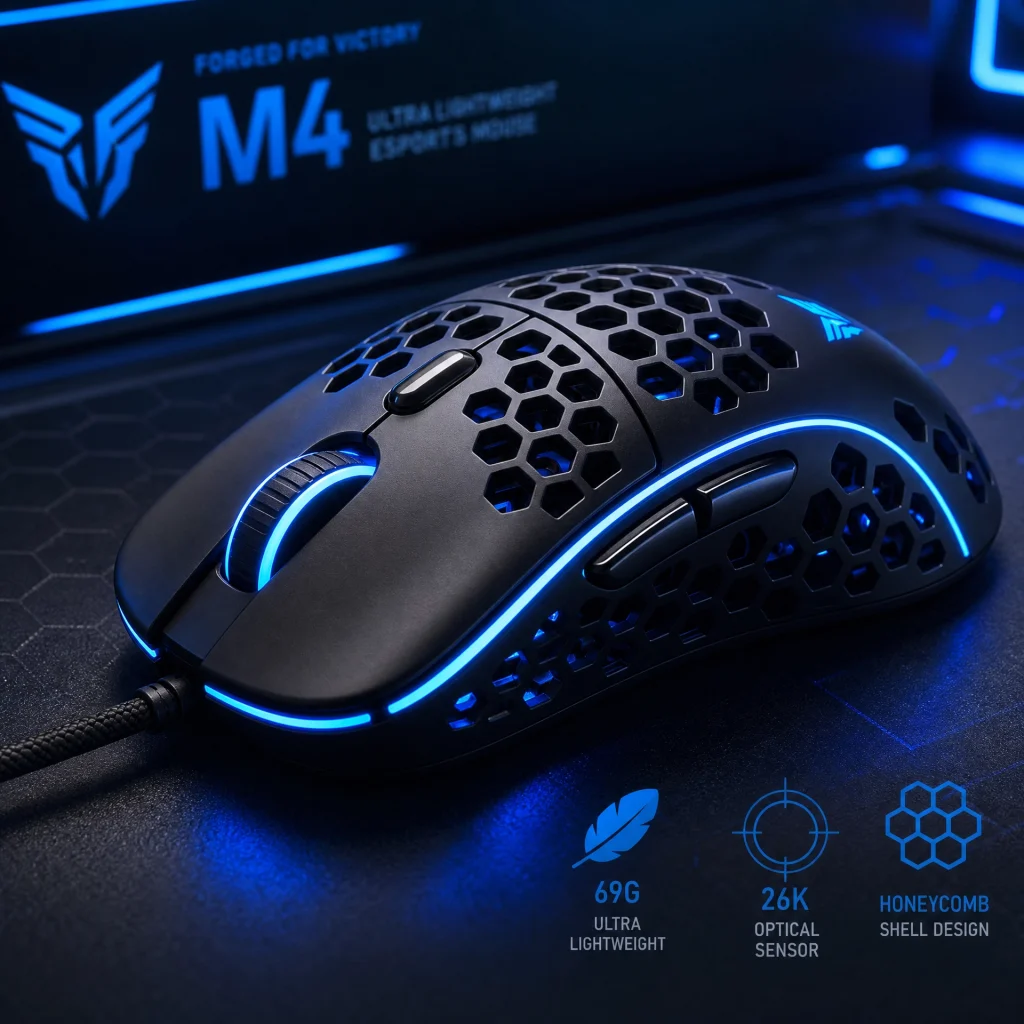
for precision and a hyper-fast, free-spinning mode for rapidly navigating long documents. Finally, surface tuning and the material composition of the bottom skates play a crucial role in reducing kinetic friction. Premium peripherals employ feet made from 100% pure Polytetrafluoroethylene (PTFE), commonly known as Teflon. These PTFE skates provide an incredibly smooth glide across cloth, hard plastic, or metal surfaces. Less friction means less physical force is required to initiate movement, which directly translates to reduced strain on the user’s wrist over a standard eight-hour workday. Additionally, the overall weight of the device has become a focal point for modern design. Engineers have developed innovative honeycomb shell structures and ultra-thin polymer walls to reduce the total mass of the unit without compromising structural integrity. A lighter device has lower inertia, making it significantly easier to start and stop sudden movements. When combined with frictionless PTFE skates and a flawless optical sensor, a lightweight chassis provides an effortless navigation experience that feels almost like an extension of the user’s own arm. The evolution of computer peripherals has drastically changed how we interact with digital environments. In the early days of personal computing, navigation devices were mechanical, relying on a rubber ball to track movement across a physical surface. These early models were prone to collecting dust and required constant maintenance to function smoothly. Today, however, the landscape has shifted entirely toward advanced optical and laser sensors. These modern tracking technologies utilize light-emitting diodes or infrared lasers to detect microscopic variations in the surface texture beneath the device. This shift has resulted in unprecedented accuracy, allowing users to navigate complex user interfaces, edit high-resolution photographs, and execute rapid commands with zero latency. Understanding the underlying technology of these peripherals is essential for anyone looking to optimize their daily digital interactions. A superior optical sensor can track movement on almost any surface, including frosted glass and high-gloss wood, removing the strict necessity for traditional mousepads. Furthermore, the integration of advanced microcontrollers within these devices ensures that every micro-movement is registered and translated
Crucial Technical Upgrades for Modern Models
Internal performance should never be an afterthought when buying a wireless mouse. Modern optical sensors are remarkably quick, and a reinforced wireless mouse tracks them flawlessly. Customizable side buttons built into your wireless mouse will heavily secure your daily workflow. Always check to see if the wireless mouse has durable mechanical micro-switches. Consider these modern technical upgrades for your next wireless mouse:
- This custom lens keeps your tracking beautifully on clear glass.
- Store complex macro commands safely inside this advanced memory.
- Enjoy near instant visual response times with your wireless mouse.
- Dramatically enhance your desk setup aesthetics with vibrant lighting.
into on-screen action instantaneously. Workspace optimization involves a deep understanding of the biomechanics of the human hand, wrist, and forearm. Prolonged use of poorly designed input devices can lead to severe repetitive strain injuries, such as carpal tunnel syndrome and tendonitis. To combat this, industrial designers spend countless hours studying anatomical neutral positions. A truly optimized peripheral promotes a natural handshake posture, preventing the two bones in the forearm from crossing and compressing vital median nerves. Moreover, the physical dimensions of the device must accommodate various hand sizes and grip styles, including palm, claw, and fingertip grips. The palm grip rests the entire hand on the device for maximum support, while the claw grip arches the fingers for faster clicking. The fingertip grip, favored by users needing rapid, minute adjustments, relies solely on the tips of the fingers to maneuver the unit. By selecting a device that perfectly matches your specific hand size and preferred grip style, you can significantly reduce localized muscle fatigue and enhance your overall stamina during long work or study sessions. When discussing modern sensor technology, technical specifications such as Dots Per Inch (DPI) and polling rates frequently dominate the conversation. DPI is a measure of spatial tracking density; a higher DPI setting means the cursor will travel further across the screen relative to a smaller physical movement on the desk. While incredibly high DPI numbers are often marketed aggressively, most standard users operate comfortably between 800 and 1600 DPI. High-resolution multi-monitor setups, however, may benefit from higher sensitivities to traverse vast pixel distances quickly. The polling rate, measured in Hertz (Hz), indicates how many times per second the device reports its exact position to the host computer. A standard office peripheral might operate at 125Hz, reporting its position every 8 milliseconds. In contrast, high-performance variants boast polling rates of 1000Hz or even 8000Hz, reducing the reporting delay to a mere fraction of a millisecond. This ultra-fast communication protocol ensures that the visual representation on the monitor remains perfectly synchronized with the user’s physical input,
How to Properly Clean and Maintain Your wireless mouse
Maintaining your wireless mouse is highly important for maximum longevity. Do not use extremely harsh liquid chemicals on the plastic surface. Store your wireless mouse safely in a clean area to prevent direct sensor damage. A perfectly clean wireless mouse looks completely professional and fresh every single day of the week.
creating a seamless and highly responsive experience. Switch durability and tactile feedback are other massive factors contributing to the overall quality of an input device. The primary left and right click buttons are typically supported by mechanical micro-switches, manufactured by industry leaders who rate them for tens of millions of actuations. A high-quality switch provides a satisfying, crisp tactile bump and an audible click, assuring the user that their input has been registered successfully. Recently, optical switch technology has been introduced to the market, utilizing an infrared light beam to register clicks instead of traditional physical metal contacts. This innovation entirely eliminates the ‘debounce delay’—a programmed delay meant to prevent a single physical click from registering twice. Optical switches are immune to the physical degradation that eventually causes older mechanical switches to double-click unintentionally, drastically extending the reliable lifespan of the product. Beyond the primary buttons, the scroll wheel mechanism also requires precise engineering. Modern scroll wheels feature adjustable resistance, allowing users to switch between a tactile, notched scrolling mode for precision and a hyper-fast, free-spinning mode for rapidly navigating long documents. Finally, surface tuning and the material composition of the bottom skates play a crucial role in reducing kinetic friction. Premium peripherals employ feet made from 100% pure Polytetrafluoroethylene (PTFE), commonly known as Teflon. These PTFE skates provide an incredibly smooth glide across cloth, hard plastic, or metal surfaces. Less friction means less physical force is required to initiate movement, which directly translates to reduced strain on the user’s wrist over a standard eight-hour workday. Additionally, the overall weight of the device has become a focal point for modern design. Engineers have developed innovative honeycomb shell structures and ultra-thin polymer walls to reduce the total mass of the unit without compromising structural integrity. A lighter device has lower inertia, making it significantly easier to start and stop sudden movements. When combined with frictionless PTFE skates and a flawless optical sensor, a lightweight chassis provides an effortless navigation experience that feels almost like an extension of the user’s own arm.
